
Wise vs Remitly vs Western Union: Which Is Best?
Introduction
When we send money to family members in another country, the service we choose matters more than most people realize. The difference between one transfer platform and another — in fees, exchange rates, delivery speed, and available options — can mean meaningfully different amounts arriving at the destination, month after month.
Three names appear frequently when immigrants in the United States research international money transfers: Wise, Remitly, and Western Union. Each is a legitimate, established service. Each works differently. And each serves different needs better than the others depending on the situation.
This guide explains how these three services operate, how they differ on the factors that matter most, and what questions to ask when deciding which one fits our specific transfer needs. The goal is not to declare one universally best — it is to explain the differences clearly enough that we can identify which is best for us.
How International Money Transfer Services Work
All three services function as financial transfer intermediaries — platforms that facilitate the movement of money from a sender in one country to a recipient in another, handling the currency conversion and delivery logistics in between.
When we initiate a transfer:
We provide the amount we want to send, the destination country, and the recipient’s details. The service converts our U.S. dollars into the recipient’s local currency at an exchange rate it determines. The service delivers the converted funds to the recipient through the available delivery method — a bank account deposit, a mobile wallet credit, or a cash pickup location.
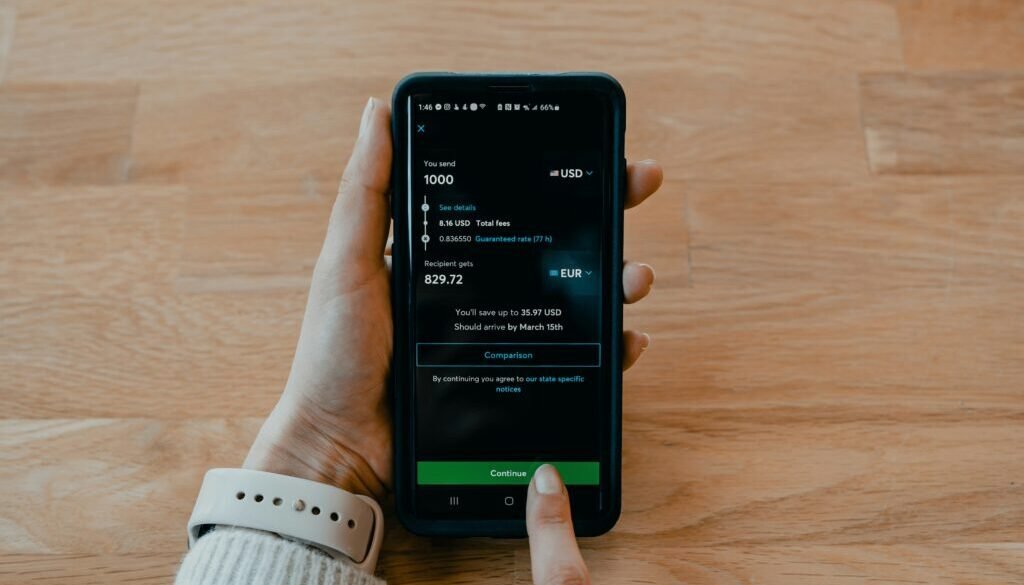
The total cost to us — and the total amount the recipient receives — is shaped by two components: the explicit transfer fee charged by the service, and the exchange rate margin applied during currency conversion.
Amount received = Amount sent − Transfer fees
But as we explain in our guide How Exchange Rates Affect Your Transfers, the exchange rate margin is an equally real cost that reduces the received amount further — even when it is not labeled as a fee. Comparing services on the final amount the recipient receives, rather than the fee alone, is always the most accurate evaluation.
Wise: The Mid-Market Rate Model
Wise — formerly known as TransferWise — built its market position on a specific and distinctive approach to exchange rates.
How Wise works. Wise commits to using the mid-market exchange rate — the true midpoint between buying and selling rates, the same rate that banks use when trading currencies among themselves. Instead of embedding profit in an exchange rate margin, Wise charges a transparent, percentage-based fee that is displayed clearly before the transfer is confirmed.
This approach means the exchange rate the sender sees is the real market rate — not a marked-up version. The fee is explicit and visible. The result is a transfer cost structure that is straightforward to understand and compare.
Fees. Wise charges a percentage of the transfer amount, which varies by destination currency and payment method. The percentage is generally competitive with or lower than the all-in cost of services that advertise low fees but apply exchange rate margins. For many currency corridors, Wise’s total cost — fee plus exchange rate — compares favorably with alternatives.
Transfer speed. Wise transfers typically arrive within one to two business days for bank account deposits, though times vary by destination country and currency. Some transfers arrive faster; some may take longer depending on the banking systems involved.
Delivery methods. Wise primarily supports bank account deposits. It does not generally offer cash pickup services, which limits its usefulness for recipients who do not have bank accounts or for whom cash collection is more practical.
Best suited for. Wise tends to work well for senders who are transferring to recipients with bank accounts in countries where Wise has strong coverage, who prioritize exchange rate transparency, and who are not in urgent need of same-day delivery.
Remitly: Speed and Delivery Flexibility
Remitly is a dedicated remittance platform designed specifically for the international money transfer needs of immigrant senders — with a particular emphasis on delivery flexibility and transfer speed.
How Remitly works. Remitly offers two main service tiers: Economy (standard speed, lower fees) and Express (faster delivery, higher fees or slightly less favorable exchange rates). Senders choose their priority — cost or speed — and the pricing adjusts accordingly.
Fees and exchange rates. Remitly typically applies an exchange rate margin — meaning the rate offered to customers is less favorable than the mid-market rate — in addition to a transfer fee that varies by destination, amount, and service tier. The combination of fee and rate determines the all-in cost. For some corridors, Remitly offers competitive pricing; for others, the total cost may be higher than alternatives. Using a comparison tool for the specific corridor is the most reliable way to evaluate this.
Transfer speed. Express transfers through Remitly can arrive within minutes for supported delivery methods and destinations — one of the platform’s strongest features for senders with urgent needs. Economy transfers typically take three to five business days. The speed difference between tiers is significant, and the pricing difference reflects this.
Delivery methods. Remitly supports a broader range of delivery options than Wise — including bank account deposits, mobile wallet transfers, and cash pickup at partner locations in many destination countries. This flexibility makes Remitly more useful for recipients without bank accounts or in regions where mobile wallets or cash pickup are the primary financial tools.
Best suited for. Remitly tends to work well for senders who need delivery flexibility — particularly cash pickup or mobile wallet options — or who occasionally need fast transfers for urgent situations. Its broad country coverage and multiple delivery methods make it accessible for a wide range of destination countries.
Western Union: The Global Physical Network
Western Union is the oldest and most geographically extensive money transfer service in the world — a legacy provider with a physical agent network that reaches countries and communities that digital-only platforms do not.
How Western Union works. Western Union operates through both digital channels (website and app) and a massive network of physical agent locations — retail stores, pharmacies, convenience stores, banks, and post offices — in countries around the world. Senders can initiate transfers online or in person; recipients can receive funds in bank accounts or collect cash at any participating agent location near them.
Fees and exchange rates. Western Union’s pricing structure is complex and varies significantly by destination country, payment method, transfer amount, and delivery speed. Transfer fees can be meaningful — sometimes higher than digital-first competitors — and exchange rate margins are typically applied on top. The combined all-in cost for some corridors is higher than Wise or Remitly for equivalent transfers.
However, for destinations where Wise and Remitly have limited coverage or limited delivery options, Western Union’s broader network may make it the most practical option regardless of cost.
Transfer speed. Western Union offers both rapid and standard transfer options. Money in Minutes transfers — for cash pickup — can be available for collection within minutes of the transfer being initiated. Bank account deposit speeds vary by destination. The speed advantage is most pronounced for cash pickup scenarios.
Delivery methods. Cash pickup is Western Union’s most distinctive and most established offering. For recipients in rural areas, countries with underdeveloped banking infrastructure, or situations where cash is the only practical form of receipt, Western Union’s physical network is unmatched in reach. Bank account deposits are also available in many countries.
Best suited for. Western Union is particularly well-suited for senders whose recipients cannot easily receive bank deposits or mobile wallet transfers — those who need cash collection, who live in areas where digital alternatives have limited reach, or who are sending to countries where Western Union’s coverage significantly exceeds that of newer platforms.
Comparing the Three: What the Differences Mean in Practice
Each service has distinct strengths and limitations. The right choice depends on what we prioritize.
On exchange rates and transparency. Wise offers the most transparent rate structure — mid-market rate plus explicit fee. Remitly and Western Union both apply exchange rate margins that are less transparent without active comparison. For senders who prioritize understanding exactly what they are paying, Wise’s structure is easiest to evaluate.
On delivery flexibility. Western Union offers the broadest delivery network, with cash pickup locations in countries and communities the other services may not serve well. Remitly offers meaningful delivery flexibility — including mobile wallets — for many destinations. Wise is primarily a bank-to-bank service with limited cash delivery.
On transfer speed. For urgent transfers, both Remitly Express and Western Union’s Money in Minutes offer rapid delivery to qualifying destinations. Wise’s processing times are competitive for standard bank transfers but not designed around urgency.
On cost. This varies by corridor, amount, and current rates. No single service is cheapest for all destinations at all times. For any specific transfer, using a comparison tool that displays the final received amount across services — for the specific destination and amount — produces more accurate conclusions than general statements about which service is typically cheaper.
On country coverage. Western Union serves the most countries globally. Remitly covers a substantial range, particularly in Latin America, South and Southeast Asia, and Africa. Wise covers major economies with developed banking systems but has more limited reach in some regions.
Security Across All Three Services
All three services are regulated financial institutions — registered money services businesses subject to U.S. federal and state regulatory requirements.
All three use standard security measures including identity verification for account opening, encryption for data transmission, and fraud monitoring systems. These are not differentiating factors between the three — they are baseline requirements that all legitimate transfer services meet.
What differs is customer service quality and issue resolution — factors that are best evaluated through user reviews from people sending to the same destination country, rather than through general platform descriptions.
Making the Right Choice for Our Specific Situation
Rather than a single “best” service, the right approach is to identify which factors matter most for our specific transfer needs and evaluate each service against those priorities.
Key questions to ask:
Does the recipient have a bank account — and is it in a country well-served by the platform? Or do they need cash pickup? Is speed important for this transfer, or is standard timing acceptable? How does the total all-in cost — fee plus exchange rate gap — compare for the specific amount and destination? Is the service available and reliable for our specific corridor?
Using a transfer comparison tool that shows real-time final received amounts for multiple services on the specific transfer we are planning produces the most actionable answer to the cost question.
We cover cost comparison strategies in detail in our guides Cheapest Ways to Send Money Abroad and How to Save Money While Sending Money Abroad, and explain the technical aspects of how platform differences affect our transfers in Best Money Transfer Apps for Immigrants.
Conclusion
Wise, Remitly, and Western Union each serve international money transfer needs effectively — but in meaningfully different ways. Wise offers exchange rate transparency and competitive pricing for bank-to-bank transfers in well-covered corridors. Remitly offers delivery flexibility and strong speed options for urgent transfers. Western Union offers unmatched geographic reach and cash delivery for recipients in communities that digital platforms do not serve well.
None is universally best. The best service for any sender is the one that delivers the most money to the recipient, through the most practical delivery method, at the speed the situation requires.
Understanding these differences — and comparing options for each transfer rather than defaulting to habit — ensures more of what we earn reaches the people we are sending it to.
MARVODYN provides financial education for informational purposes only. Transfer costs, speeds, and exchange rates vary depending on destination country and transfer conditions. This content does not constitute remittance service recommendations or financial advice. See our full disclaimer at marvodyn.com.