
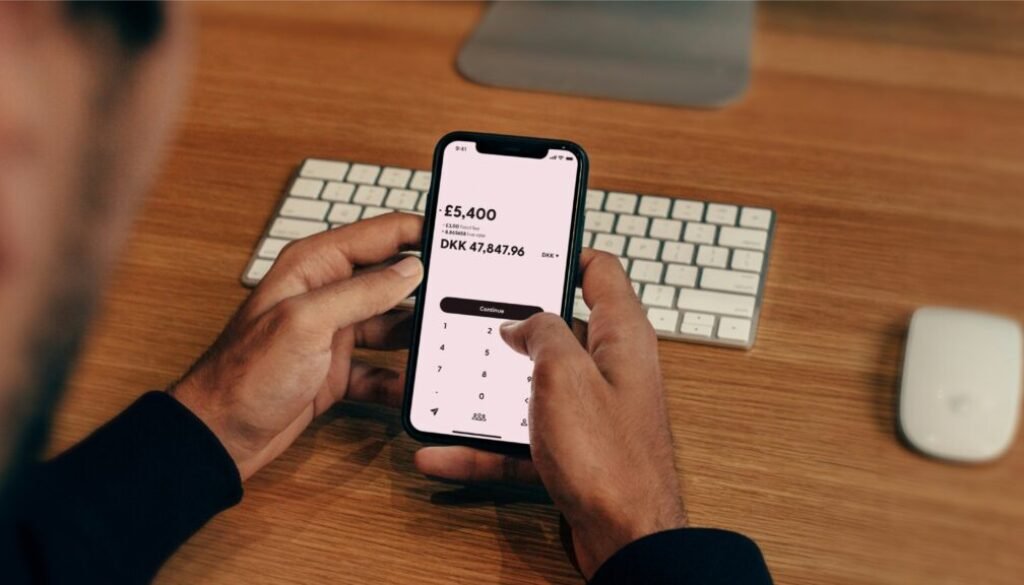
Best Money Transfer Apps for Immigrants
Introduction
For millions of immigrants living and working in the United States, sending money home is not an occasional activity — it is a regular financial commitment. Parents, siblings, children, and extended family members depend on these transfers to cover housing, food, school fees, and medical expenses.
Traditionally, sending money internationally meant visiting a physical remittance location, standing in line, and paying high flat fees. Bank wire transfers offered another option — but often with significant fees and unfavorable exchange rates.
Digital money transfer apps have changed this landscape substantially. Today, international transfers can be initiated from a smartphone in minutes, sent to dozens of countries, and received through bank accounts, mobile wallets, or local cash pickup locations — often at lower cost and higher speed than traditional methods.
But not all apps work the same way, and not all are equally cost-effective for every sender and destination. Understanding how these platforms operate — what drives the cost, what features matter, and how to evaluate options — is how we use them effectively rather than simply conveniently.
What a Money Transfer App Is
A money transfer app is a digital platform — accessible through a smartphone application or a website — that allows individuals to send funds from the United States to recipients in other countries.
Unlike a traditional bank wire, which is processed entirely through the banking system and typically takes several business days, dedicated money transfer apps are built specifically for international remittances. They maintain relationships with financial networks, banks, and cash distribution partners in destination countries — allowing them to move money through specialized corridors that are often faster and more cost-competitive than standard bank channels.
The sender funds the transfer from a U.S. bank account, debit card, or in some cases a credit card. The app converts the funds into the recipient’s local currency and delivers them through whichever delivery method is available and selected — a bank account deposit, a mobile wallet credit, or a cash pickup at a partner location near the recipient.
How the Cost of a Transfer Is Determined
Every international money transfer involves two layers of cost that together determine how much money actually reaches the recipient.
Transfer fees are the explicit charges the app applies for processing the transaction. These are usually displayed clearly before the transfer is confirmed. They may be structured as flat fees — the same amount regardless of transfer size — or as percentages of the amount sent, or as a combination of both.
Exchange rate margins are less immediately visible but equally significant. When U.S. dollars are converted into the recipient’s local currency, the rate applied by the transfer app is typically slightly less favorable than the true mid-market rate — the rate that banks use when trading currencies with each other. The difference between the true market rate and the rate offered to the customer is kept by the service as additional revenue.
The basic relationship between what we send and what arrives is:
Amount received = Amount sent − Transfer fees
But this formula only captures the explicit fee portion of the cost. The exchange rate margin reduces the received amount further — meaning the true total cost of any transfer is always fees plus the exchange rate gap combined.
This is why comparing transfer services based on the final amount the recipient receives — not just the advertised fee — is the only accurate way to evaluate cost. A service with no visible fee may still deliver less money to the recipient than a service charging a $3 fee but offering a more favorable exchange rate.
We explain this comparison approach in detail in our guides Cheapest Ways to Send Money Abroad and How Exchange Rates Affect Your Transfers.
How Recipients Receive Funds
One of the most important considerations when choosing a money transfer app is whether the delivery method available matches what works for our specific recipient.
Bank account deposit is the most common delivery method in countries with well-developed banking systems. The funds are transferred directly into the recipient’s local bank account, typically within one to three business days for standard transfers, and sometimes within hours for expedited ones. This method is convenient for recipients who have bank accounts and regularly use them.
Mobile wallet transfer is increasingly important in countries where mobile payment systems are more widely adopted than traditional banking. Funds are delivered directly to the recipient’s mobile wallet — a digital account accessed through a smartphone — which can then be used for purchases, bill payments, or cash withdrawal. In many parts of Africa, Asia, and Latin America, mobile wallets have become a primary financial tool for people who are underserved by traditional banks.
Cash pickup allows recipients to collect funds in cash at a partner agent location — a local store, pharmacy, or financial services outlet that participates in the transfer service’s distribution network. This method is essential for recipients in rural areas, for those without bank accounts, or in situations where immediate cash access is needed. The availability of cash pickup locations varies by country and service.
Not every app supports every delivery method in every country. Confirming that the chosen service offers the right delivery method for our recipient — in their specific city or region — is a practical first step before committing to any platform.
Key Features to Evaluate When Choosing a Transfer App
When comparing money transfer apps, several features determine which service best meets our specific needs.
Supported countries and currencies. Transfer apps vary significantly in geographic coverage. Some operate in a large number of countries worldwide; others focus on specific regions or corridors. Confirming that the app supports our specific destination country and the recipient’s local currency is the most basic eligibility check.
Transfer fees. The explicit fee per transfer — whether flat or percentage-based — affects the total cost directly. For flat-fee services, larger transfers become relatively more cost-effective per dollar sent. For percentage-based fees, the cost scales with the transfer amount.
Exchange rate offered. This requires looking beyond the fee. Most apps display the exchange rate being applied before a transfer is confirmed. Comparing this rate against the current mid-market rate — available through financial data websites — reveals the exchange rate margin and gives a complete picture of the true transfer cost.
Transfer speed. Speed options vary by service, destination country, delivery method, and funding source. Many apps offer both standard and expedited delivery tiers, with faster transfers sometimes carrying higher fees or less favorable exchange rates. For routine monthly transfers without urgency, standard speed typically offers better pricing.
Payment method accepted. Most apps accept bank account transfers and debit cards. Some accept credit cards, though this typically generates higher fees — and credit card issuers may classify the transaction as a cash advance, adding interest charges from the moment of transfer. Funding transfers from a bank account is generally the lowest-cost option.
Transfer limits. Apps may impose per-transaction or per-day limits on transfer amounts. For senders who regularly transfer larger amounts, confirming that the app’s limits accommodate the typical transfer size is important.
Available in both locations. Some transfer methods — particularly mobile wallet transfers — require the recipient to have an account with a specific platform in their country. Confirming that the recipient can easily receive and access funds through the chosen method avoids delivery problems after a transfer is sent.
Transfer Speed and Its Cost Implications
The speed at which a transfer arrives influences both the experience and the cost.
Many apps offer near-instant transfers for certain country corridors and delivery methods — particularly when the transfer is funded by a debit card and delivered to a mobile wallet. These fast transfers are convenient when timing matters.
Standard bank account deposit transfers typically take one to three business days. In most cases, they carry lower fees or better exchange rates than instant options.
The practical approach for regular monthly remittances — where timing is predictable — is to initiate transfers a few days before the funds are needed, using standard processing. This reduces cost without creating meaningful inconvenience. Reserving faster, potentially more expensive transfer options for genuine urgency — a medical situation, an unexpected family need — preserves cost savings for routine transfers.
We discuss timing strategies in our guide How to Save Money While Sending Money Abroad.
Security and Reliability
Sending money internationally through a digital platform involves sharing financial and personal information. Understanding how transfer apps protect users — and how to evaluate whether a service is trustworthy — is an important part of using these tools responsibly.
Regulatory registration. Legitimate money transfer companies operating in the United States are registered with the Financial Crimes Enforcement Network (FinCEN) as Money Services Businesses. Most states also require separate licensing for money transmitters. Checking that a service is properly registered provides a baseline verification of legitimacy.
Encryption and data protection. Reputable transfer apps use industry-standard encryption to protect financial data and personal information during transmission. Look for HTTPS in web addresses and evidence of security certifications in app descriptions.
Identity verification. Legitimate services require identity verification before allowing significant transfers — typically through government ID and in some cases biometric confirmation. This verification process, while sometimes time-consuming when setting up a new account, is a protection mechanism that reduces fraud risk for all users.
Track record and user reviews. An established service with a history of reliable transfers and responsive customer support provides more confidence than a newer, less-known option — particularly for first-time users. Checking user reviews for reports of delivery problems, customer service responsiveness, and fund recovery issues provides practical insight that official descriptions do not.
Avoiding unofficial services. Sending money through informal or unregistered channels — individuals claiming to facilitate transfers outside of regulated platforms — carries significant risk of loss with no legal recourse. Using only registered, verifiable services protects both the sender and the recipient.
How Transfer Costs Vary by Situation
Transfer costs are not fixed — they vary based on several variables that interact with each other.
Destination country. Transfer costs vary significantly between different corridors. Sending money to a country with a well-developed financial infrastructure and strong competition between transfer services typically costs less than sending to a less-served destination. Some corridors have very competitive pricing; others remain expensive regardless of which service is used.
Amount sent. For flat-fee services, the cost per dollar sent decreases as transfer amounts increase. For percentage-based services, the total fee scales with the amount. Understanding which fee structure our primary service uses helps optimize how we structure transfers.
Payment method. Bank account funding produces the lowest fee in most cases. Debit cards may add a small additional charge. Credit cards typically generate the highest costs and should generally be avoided for this purpose.
Delivery speed. Standard processing is typically less expensive than expedited or instant options for the same corridor and delivery method.
For international students who are also managing remittances alongside student budgets, our guide How International Students Can Send Money Home addresses these considerations in the specific context of student financial life.
Conclusion
Money transfer apps have made international remittances more accessible, faster, and in many cases less expensive than traditional methods. For immigrants supporting family abroad, they represent a meaningful improvement over the options that existed even a decade ago.
Using them effectively — rather than simply conveniently — means understanding the two-part cost structure of fees and exchange rate margins, comparing options based on final received amount, choosing delivery methods that match the recipient’s situation, and using platforms that are properly registered and security-conscious.
That knowledge, applied consistently, ensures that more of what we earn reaches the people we are sending it to.
MARVODYN provides financial education for informational purposes only. Transfer fees, exchange rates, and supported countries vary between financial services. This content does not constitute financial service recommendations. See our full disclaimer at marvodyn.com.