Best Bank Accounts for Immigrants and Newcomers
Not All Bank Accounts Are Created Equal
Once you understand how to open a bank account and what documents you need, the next challenge is deciding where to open one and which type of account is right for your situation.
This decision matters more than most people realize. The wrong bank account can cost you hundreds of dollars per year in unnecessary fees. It can limit your access to services you need. It can make your financial life harder rather than easier.
The right bank account, on the other hand, works quietly in your favor. It charges little or nothing in fees. It gives you easy access to your money. It grows with you as your financial life develops. And it treats you with respect, regardless of how recently you arrived in the country.
This guide will help you understand exactly what to look for when evaluating bank accounts as an immigrant and what types of institutions and accounts tend to serve immigrants best.
The Most Important Question: What Do You Actually Need?
Before evaluating specific accounts, it is worth thinking about what you actually need from a bank at this stage of your financial life.
For most new immigrants, the core needs are:
A safe place to receive income. Direct deposit from an employer is the most common and most efficient way to receive wages in the United States. You need an account that accepts direct deposit.
A way to pay bills electronically. Rent, utilities, and most other regular expenses can be paid online or through automatic payment. You need an account that supports these transactions.
Access to cash when needed. Through an ATM network, you should be able to withdraw cash when necessary without paying excessive fees.
Low or no fees. When you are building a financial life from scratch, every dollar matters. An account that charges $12 to $15 per month in maintenance fees costs you $144 to $180 per year — money that could go toward savings or other priorities.
Online and mobile access. The ability to check your balance, review transactions, and manage your money from your phone is increasingly essential.
Reasonable customer support. When something goes wrong or you have a question, you need to be able to reach someone who can help.
Keep these needs in mind as you evaluate your options.
Types of Institutions to Consider
Large National Banks
Large national banks such as Bank of America, Chase, Wells Fargo, and Citibank have thousands of branches and ATMs across the country. Their scale means they offer extensive services and broad accessibility.
Advantages: Wide branch and ATM networks. Robust mobile banking apps. Large customer service operations. Widely recognized and trusted.
Disadvantages: Often charge higher fees. Monthly maintenance fees are common. Minimum balance requirements can be strict. Immigrant-specific accommodations vary by location and staff.
Best for: Immigrants who need physical branch access in multiple locations, who have direct deposit that waives fees, or who prefer the stability and recognition of a large institution.
Community Banks
Community banks are smaller banks that serve a specific local area. They tend to have more personalized service than national banks. Some community banks in areas with large immigrant populations have developed specific programs for immigrant customers, including ITIN acceptance and multilingual staff.
Advantages: More personalized service. Sometimes more flexible on documentation requirements. May have stronger relationships with local immigrant communities.
Disadvantages: Smaller ATM networks. Fewer branch locations. Online banking tools may be less sophisticated than large banks.
Best for: Immigrants who prefer a more personal banking relationship and who live in an area served by a community bank with immigrant-friendly policies.
Credit Unions
Credit unions are nonprofit financial cooperatives that often offer the best combination of low fees, reasonable interest rates, and personalized service. Many credit unions serve specific professional communities, geographic areas, or employer groups.
Advantages: Lower fees than most banks. Better interest rates on savings accounts. More flexible on documentation in some cases. Member-owned, so profits go back to members rather than shareholders.
Disadvantages: Membership requirements may limit access. Smaller ATM networks, though many participate in shared ATM networks. Fewer branch locations.
Best for: Immigrants who qualify for membership and prioritize low fees and better savings rates.
Online Banks
Online banks operate entirely through websites and mobile apps. They have no physical branches. Because they have lower overhead costs, they often offer accounts with no monthly fees and significantly higher interest rates on savings accounts.
Advantages: Usually no monthly fees. Often higher interest rates on savings. Excellent mobile apps. Available anywhere with internet access.
Disadvantages: No physical branches. Cash deposits can be difficult or impossible. May have stricter identity verification requirements that can be challenging for immigrants with non-standard documentation. Customer service is entirely phone or chat-based.
Best for: Immigrants who are comfortable with technology, do not need to deposit cash regularly, and want to minimize fees and maximize savings interest.
Key Features to Evaluate in Any Bank Account
When comparing bank accounts, these are the factors that matter most.
Monthly Maintenance Fees
Many checking accounts charge a monthly fee simply for having the account open. These fees typically range from $5 to $15 per month. Over the course of a year, that is $60 to $180 leaving your account without providing any additional benefit.
Many banks waive the monthly fee if you meet certain conditions such as maintaining a minimum daily balance or receiving a qualifying amount of direct deposit each month. Before opening an account, understand exactly what conditions waive the fee and whether you can realistically meet them.
The best accounts for immigrants have no monthly fee at all, with no conditions attached.
Minimum Balance Requirements
Some accounts require you to maintain a minimum balance. If your balance falls below this amount, you may be charged a fee. For someone who is building their finances from scratch, being penalized for having a low balance is both costly and discouraging.
Look for accounts with no minimum balance requirement, or accounts where the minimum is set low enough that you will comfortably maintain it.
ATM Access and Fees
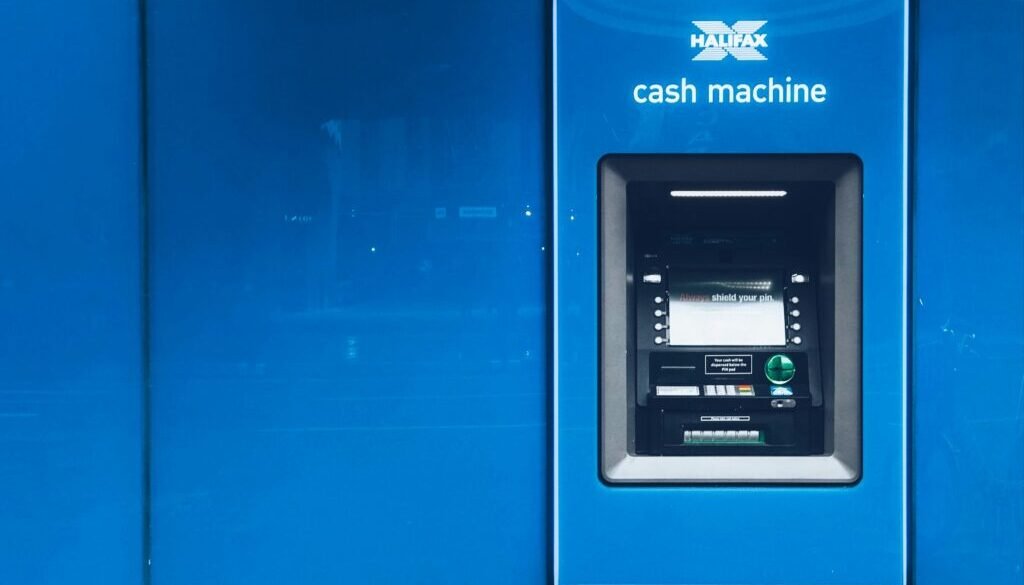
You will occasionally need to withdraw cash. When you use an ATM that belongs to your bank’s network, the transaction is typically free. When you use an ATM outside your bank’s network, you may be charged a fee by both your bank and the ATM operator.
These fees can add up quickly, particularly if your bank has a limited ATM network. Evaluate how many ATMs are conveniently located near where you live and work. Large national banks and credit unions that participate in shared ATM networks typically offer the best coverage.
Some online banks reimburse ATM fees charged by other banks up to a certain amount per month. This can be a significant benefit.
Overdraft Policies
An overdraft occurs when you spend more money than is available in your account. Different banks handle this differently.
Some banks will charge you an overdraft fee — often $25 to $35 per transaction — every time this happens. Some banks will decline the transaction instead of allowing it to go through, which avoids the fee. Some banks offer linked savings accounts or lines of credit that automatically cover an overdraft at a lower cost.
Understanding a bank’s overdraft policy before opening an account is important. We will cover overdraft fees in much greater detail in the next guide in this series.
Online and Mobile Banking Quality
The quality of a bank’s digital tools affects your everyday experience significantly. A good mobile banking app should allow you to:
- Check your balance and review recent transactions
- Deposit checks by taking a photograph (this is called mobile check deposit)
- Transfer money between accounts
- Pay bills online
- Set up account alerts
- Contact customer service
Before opening an account, it is worth reading reviews of the bank’s app in your phone’s app store. Poor digital tools can make managing your money much more difficult.
Immigrant-Friendly Policies
Some banks have explicitly developed policies and programs to serve immigrants. These may include:
- Accepting ITIN in place of Social Security Number
- Accepting foreign passports and consular IDs as identification
- Offering services and materials in multiple languages
- Having multilingual staff available at branches
- Having simplified account options for people new to U.S. banking
If any of these considerations are important to your situation, research them before choosing a bank.
International Transfer Services
Many immigrants send money to family in their home countries. The cost and convenience of international money transfers varies significantly between banks. Some banks offer competitive exchange rates and low transfer fees. Others charge high fees and use poor exchange rates that cost you significantly more than the stated fee suggests.
If you plan to send money internationally regularly, evaluate this as part of your bank selection process. There are also specialized services outside of traditional banks that often offer better rates for international transfers, which we will cover in other guides.
Types of Checking Accounts Worth Knowing About
Free Checking Accounts
These are checking accounts with no monthly maintenance fee and no minimum balance requirement. They are the most straightforward option and often the best starting point for immigrants who want simplicity and low cost.
Student Checking Accounts
Designed for college students, these accounts typically have no monthly fee and no minimum balance requirement. They are available to international students at many banks and can be an excellent option for immigrants attending U.S. schools. Some student accounts convert to standard accounts after a certain period.
Second-Chance Checking Accounts
These accounts are designed for people who have had banking problems in the past and have a negative ChexSystems record. They may have more restrictions than standard accounts — such as no overdraft access — but they allow you to begin or rebuild a U.S. banking history. If you have been declined for a standard account, a second-chance account can be a productive starting point.
Online-Only Checking Accounts
Offered by digital banks, these accounts typically have no monthly fee, no minimum balance, and sometimes offer features like early access to direct deposit. They are excellent for people comfortable with technology who do not need branch access.
Pairing Your Checking Account With a Savings Account
Most financial advisors recommend maintaining both a checking account and a savings account. Your checking account handles daily transactions and bill payments. Your savings account holds money you are setting aside for future goals.
When evaluating savings accounts, the most important feature is the interest rate, known as the Annual Percentage Yield or APY. This tells you how much interest your money earns over one year.
Traditional bank savings accounts often pay very little interest. Online banks and some credit unions offer significantly higher rates. Over time, the difference in interest earned can be meaningful.
Even if you are starting with a very small amount in savings, developing the habit of keeping money in a separate savings account is one of the most valuable financial behaviors you can build.
Conclusion: The Right Account Is a Foundation, Not Just a Container
Choosing the right bank account is not simply about finding a place to store money. It is about building a relationship with the financial system that serves your actual needs, respects your situation as an immigrant, and costs you as little as possible in fees.
Take the time to compare your options before committing. Look for accounts with no monthly fees, no minimum balance requirements, convenient ATM access, and immigrant-friendly documentation policies. If you have an ITIN rather than a Social Security Number, confirm acceptance before applying.
In our final article in this series, we will focus on bank fees in detail — what they are, how they work, how much they can cost you, and exactly how to avoid them.
Understanding fees is one of the most practical and immediately valuable pieces of financial knowledge you can have. It is the difference between a bank account that helps you and one that quietly costs you money every single month.