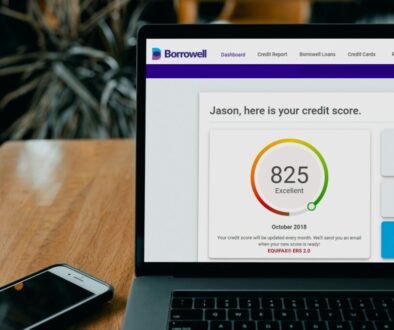

How Long It Takes to Build Credit From Zero
Introduction
One of the first questions many of us ask after arriving in the United States is a simple one.
We open a bank account. We apply for our first credit card or take out a small loan. We start paying bills. And then we wait.
How long before we actually have a credit score?
It is a fair question — and one that does not always have a clear answer when we are just starting out. In many countries, financial identity comes with time or with a government record. Here, it works differently.
In the United States, credit history does not exist automatically. It is not assigned to us when we arrive. It is not connected to our income or our bank balance. It must be built — deliberately, over time, through borrowing and repayment activity that gets recorded and tracked.
This guide explains exactly how that process works and what realistic timelines look like at every stage.
Starting From Zero Is Normal
Before we talk about timelines, it helps to understand where we are starting from.
When we first arrive in the United States with no prior U.S. credit history, we have what the financial system calls a thin file — or in some cases, no file at all. This simply means the credit bureaus have no data on us yet. There is no record of how we borrow or repay money in this country because we have not had the opportunity to establish one.
This is not a negative mark. It is not the same as having bad credit. It means we are beginning from a blank page.
Every person who has ever built strong credit in the United States started from exactly this same place. The process is the same for everyone. What matters is how we manage it from here.
How a Credit Score Is Created
To understand the timeline, we first need to understand how a credit score is generated.
When we open a credit account — a credit card, a credit builder loan, or another borrowing product — the financial institution that issued it reports our activity to the three major credit bureaus in the United States: Experian, Equifax, and TransUnion. These agencies collect that data and use it to build our credit report.
A credit score is then calculated from what is in that report. But here is the important detail: a scoring model cannot generate a score from nothing. It needs a minimum amount of recorded activity before it has enough information to work with.
Under the most widely used scoring model — the FICO Score — a credit score can typically be generated once we have at least one account that has been open for six months or more, with at least one account reporting activity within the last six months.
This means the system is not slow because of a flaw. It is simply collecting data. The clock starts the moment we open our first account and begin making payments.
The Timeline for a First Credit Score
For most people who open their first U.S. credit account and use it responsibly, a credit score will appear within three to six months.
During this period, our payment activity is being reported to the bureaus. Each on-time payment adds a data point to our report. After enough data has been collected, the scoring model has what it needs to calculate a number.
Three to six months is the typical window, but the exact timing can vary depending on which financial institution we use and how frequently they report activity. Most major banks and credit card issuers report to the bureaus on a monthly basis.
The key requirement during this period is simple: we must have an open account, and it must be reporting activity. If the institution we choose does not report to the credit bureaus — which is uncommon but possible with certain smaller lenders — no score will be generated regardless of how responsibly we use the account.
When choosing a first credit product, we should confirm that it reports to all three major credit bureaus. This is one of the most important details to verify upfront.
What the First Score Means
When our first credit score appears, it is tempting to treat it as a finished result. It is not.
A first credit score simply means the system now has enough data to calculate a number. It does not mean we have strong credit. It does not mean lenders will offer us the best terms. It is the beginning of the record — not the completion of it.
Early credit scores can be modest. They may fluctuate as more activity is added to our report. A payment here, a new balance there — small changes can move the number up or down while our history is still thin.
This is expected. It is part of the process.
What matters at this stage is not where the number starts. What matters is the direction it moves over the months that follow.
The Longer Timeline for Strong Credit
A first credit score is a milestone. But building credit that actually opens doors — lower interest rates, easier approvals, access to better financial products — takes longer.
Here is a realistic picture of what the journey typically looks like.
3 to 6 months — First credit score Our first score appears. It reflects limited history. The number may be modest, but the record has begun.
6 to 12 months — Early credit history forming With six to twelve months of consistent on-time payments behind us, our profile starts to take shape. Our score may begin to rise. Lenders can see that we have been managing credit responsibly for a meaningful period.
12 to 24 months — Stronger and more stable credit profile After one to two years of responsible credit use, our history becomes more meaningful to lenders. Our score is more stable. More financial products become accessible. Landlords and lenders begin to see a borrower with a real track record.
24 months and beyond — Full credit profile With two or more years of clean payment history, we are in a strong position. The best interest rates, higher credit limits, and easier approvals across most financial products become genuinely available to us.
Most lenders prefer to see at least one to two years of credit history before offering their most favorable terms. This does not mean we cannot access credit before that point. It means that patience pays off in real financial terms.
For a deeper look at what score ranges mean and what becomes accessible at each level, our guide What Is a Good Credit Score in the United States? explains the full picture.
What Helps Us Build Credit Faster
While credit building cannot be rushed, certain habits accelerate progress and build a stronger record more efficiently.
Using a credit card regularly for small purchases. Regular activity on an account generates regular reporting. A card that sits unused produces very little data. Small, consistent purchases — a grocery run, a monthly bill, a subscription — keep the account active and reporting.
Paying the balance in full every month. Payment history is the single most important factor in our credit score. It carries more weight than any other element. Paying on time, every month, without exception, is what turns months of effort into a genuinely strong credit profile. Even one missed payment can lower our score noticeably and leave a mark on our report for years.
Keeping credit utilization low. Credit utilization is the percentage of our available credit that we are currently using. Staying below 30% of our credit limit at any given time is important for a healthy score. If our limit is $500, we should aim to keep our balance below $150. We explain this concept in more detail in our guide What Is Credit Utilization and Why It Matters.
Avoiding missed payments. This cannot be emphasized enough. A single missed payment is not a minor issue. It is recorded, reported, and affects our score for an extended period. Setting up automatic payments removes the risk of forgetting a due date.
Common Mistakes That Slow the Process
Certain behaviors do not just fail to build credit — they actively damage the progress we have made.
Missing payments. As discussed, this is the most damaging mistake available to us. Even one missed payment matters. Payment history accounts for the largest share of our credit score calculation.
Maxing out credit cards. Carrying a balance that is close to our credit limit signals financial stress to lenders and raises our utilization rate significantly. High utilization lowers our score even when we are making payments on time.
Applying for many credit accounts at once. Every credit application creates a hard inquiry on our report. Multiple applications in a short window lower our score temporarily and can make us appear financially unstable to lenders. We should apply for new credit only when we genuinely need it and are ready.
Closing accounts too early. The length of our credit history is a factor in our score. Closing an account — especially an older one — can shorten our average account age and reduce our available credit. Both effects can lower our score. In most cases, it is better to keep accounts open even if we are not actively using them.
Assuming the process is faster than it is. Impatience leads to unnecessary account applications, impulsive financial decisions, and frustration with a process that simply requires time. Understanding the realistic timeline from the beginning helps us stay consistent rather than reactive.
What to Focus on When Starting From Zero
The most important shift in thinking for us as we begin this journey is this: credit building is not a sprint. It is a reputation that develops slowly, through sustained behavior over time.
Lenders are not looking for a perfect number that appears quickly. They are looking for evidence that we manage financial responsibility consistently — that when we borrow money, we repay it on schedule, month after month.
That kind of evidence cannot be manufactured quickly. It can only be accumulated steadily.
For those of us without a Social Security Number, the path is still open. Our guides How to Build Credit in the U.S. Without a Social Security Number and Can You Build Credit With an ITIN? explain the specific steps available depending on our situation.
The process is the same regardless of where we started. Open the right account. Use it responsibly. Pay on time. Repeat.
Conclusion
Building credit from zero takes time. There is no shortcut, and there is no reason to look for one.
Within three to six months of opening our first account and making consistent payments, a credit score will appear. Within one to two years of responsible use, that score will reflect a genuine credit history that lenders take seriously. Within a few years, the financial opportunities that once felt out of reach become accessible.
Many immigrants who arrived in this country with nothing in their credit file have built strong, respected credit histories through exactly this process. Not through speed or financial complexity — through patience, consistency, and the discipline to pay on time every month.
The system rewards exactly that kind of behavior. And every month we practice it, we are building something that belongs entirely to us.
MARVODYN provides financial education for informational purposes only. This content is not financial advice. Credit scoring models and reporting timelines may vary between financial institutions. Please verify all information directly with financial institutions before making decisions. See our full disclaimer at marvodyn.com.