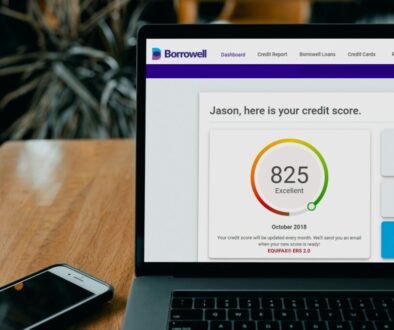

What Is a Good Credit Score in the United States?
Introduction
At some point after arriving in the United States, we start hearing about something called a credit score.
We see it mentioned when we apply for an apartment. We hear about it when we look into financing a car. We notice it when a bank asks for our credit history before approving a credit card.
And then we see numbers. 620. 680. 720. 780. Sometimes higher. Sometimes lower.
Without context, these numbers mean very little. We do not know if they are good or bad. We do not know what they measure or why they matter so much here.
This guide explains exactly what these numbers mean — and why understanding them is one of the most important steps we can take toward building financial stability in the United States.
What a Credit Score Actually Is
A credit score is a number that summarizes our credit history.
It is calculated using information from our credit report — a record of how we have borrowed and repaid money over time. That record includes things like whether we paid our bills on time, how much of our available credit we use, and how long we have had credit accounts open.
From that information, a score is generated. That score gives lenders a quick way to estimate how reliable we are likely to be as a borrower.
The higher the number, the stronger our credit history appears. The lower the number, the more risk a lender perceives.
In the United States, this number follows us into nearly every major financial decision we make.
Where Credit Scores Are Used
Before we look at the numbers themselves, it helps to understand how widely credit scores are used here.
Applying for a credit card. Card issuers check our credit score before approving an application. A stronger score opens access to better cards with lower interest rates and higher limits.
Financing a car. Auto lenders use our score to decide whether to approve a loan and what interest rate to charge. A higher score typically means lower monthly payments over the life of the loan.
Renting an apartment. Most landlords in the United States run a credit check before approving a tenant. A low score — or no score at all — can result in rejection or a request for a larger security deposit.
Taking out a personal loan. Whether we need money for an emergency, a home repair, or another purpose, personal loan lenders use credit scores to evaluate our application.
Applying for a mortgage. When we eventually want to buy a home, our credit score will be one of the most important factors in determining whether we qualify and at what interest rate.
The pattern is consistent across all of these situations. A stronger credit score means more access, better terms, and lower costs. A weaker score means fewer options and higher costs. This is why understanding and building our credit score matters so much.
The Credit Score Range in the United States
The most widely used credit scoring system in the United States is called the FICO Score. It was developed by a company called Fair Isaac Corporation and is used by most major lenders when evaluating applications.
FICO scores range from 300 to 850. Higher is better.
Here is how the range is typically categorized:
300 to 579 — Poor A score in this range signals a history of missed payments, defaults, or very limited credit activity. Most lenders will decline applications or charge very high interest rates.
580 to 669 — Fair A fair score suggests some credit activity but also some negative history. Approval is possible with some lenders, but terms are often unfavorable.
670 to 739 — Good This is where most lenders begin to feel comfortable. A score in this range reflects a history of generally responsible borrowing. Most standard credit products become accessible here.
740 to 799 — Very Good A very good score opens access to better products, lower interest rates, and easier approvals across most lenders and landlords.
800 to 850 — Exceptional A score in this range represents an excellent credit history. People with scores here typically receive the best available rates and the strongest approval chances for any credit product.
Most lenders consider a score of 670 or higher to be good. That is the threshold where financial opportunities begin to expand meaningfully.
It is worth knowing that different lenders use different standards. A landlord may have a different minimum than a mortgage lender. A credit card issuer may approve applicants at a lower score than a car loan provider. These standards are not fixed across the industry. But 670 is a widely recognized benchmark.
What a Good Credit Score Actually Allows Us to Do
Understanding the range is useful. But what does a good credit score actually mean in practice?
Lower interest rates. When we borrow money, we pay interest — a cost for using that money. Lenders charge higher interest to borrowers they consider risky and lower interest to borrowers they trust. A score above 670 — and especially above 740 — can reduce the interest rate we are offered significantly. Over the life of a car loan or a mortgage, this difference can amount to thousands of dollars.
Easier apartment approvals. Landlords use credit checks to evaluate tenants. A good score makes the process smoother and often removes the need for a larger deposit.
Access to better credit cards. Cards with rewards programs, lower fees, and better terms are generally reserved for applicants with good or very good credit. With a strong score, these products become available to us.
Higher borrowing limits. Lenders are more willing to extend larger amounts of credit to borrowers with strong histories. This gives us more financial flexibility when we need it.
Stronger financial credibility overall. In the United States, a good credit score signals reliability. It opens conversations with landlords, lenders, and financial institutions that simply do not happen without one.
Starting From Zero
Many of us arrive in the United States with no credit score at all. This is not a negative mark. It simply means there is no data yet.
The financial system has no record of how we borrow and repay money in this country. We have not done anything wrong. We are starting fresh.
This situation is sometimes called having a thin file — meaning our credit report contains very little information. Before we can improve a credit score, we first need to generate one.
The first goal is simply to open a credit account and begin using it responsibly. After three to six months of payment activity, our first credit score will typically appear. It may not be high at first. That is expected. What matters is that it exists and that we are building from that foundation.
We cover the specific steps for getting started in our guides How to Build Credit in the U.S. Without a Social Security Number and Can You Build Credit With an ITIN? — both of which are useful starting points depending on our situation.
What Influences a Credit Score
Credit scores are not random. They are calculated using specific factors, each carrying a different weight. Understanding these factors helps us make better decisions as we build our history.
Payment history is the most important factor. It accounts for the largest portion of our score. Paying every bill on time, every month, builds a positive record steadily. Missing even a single payment can lower our score noticeably and leave a mark on our report for years.
Credit utilization refers to how much of our available credit we are currently using. If our credit limit is $500 and we carry a $400 balance, we are using 80% of our available credit. That is considered high. Staying below 30% of our limit at any given time is generally recommended. We explain this in more detail in our guide What Is Credit Utilization and Why It Matters.
Length of credit history considers how long our accounts have been open. Older accounts contribute positively to our score. This is one reason why closing accounts — even ones we no longer use — can sometimes hurt us.
New credit inquiries occur when we apply for a new credit product. Each application creates what is called a hard inquiry on our report. Applying for several accounts in a short period can lower our score temporarily and signal financial stress to lenders.
Credit mix refers to the variety of credit types in our history — for example, a credit card alongside a credit builder loan. Having different types of accounts can contribute positively to our score over time, though this factor carries less weight than payment history or utilization.
Realistic Expectations
Credit scores do not change overnight. They reflect a history that is built over months and years. Understanding the realistic pace of progress helps us stay patient and consistent.
Within six months — After opening our first credit account and making on-time payments, we will typically generate our first score. It may be modest, but it marks the beginning of our financial record in this country.
Within one year — A year of responsible credit use produces a more meaningful profile. Our score begins to reflect genuine history. More financial products become available.
Within two years and beyond — Two or more years of consistent on-time payments, low utilization, and responsible borrowing creates the kind of credit profile that lenders view favorably. This is when the full benefits of a strong credit score begin to open up.
Our guide How Long It Takes to Build Credit From Zero walks through each stage of this journey in greater detail.
The pace cannot be rushed. But every month of responsible behavior adds to a record that belongs entirely to us.
Common Misunderstandings About Credit Scores
Several beliefs about credit scores are widespread but incorrect. Understanding the truth helps us avoid mistakes that could slow our progress.
One missed payment does not matter. It does. A single missed payment can lower our score significantly and remain on our credit report for up to seven years. Every payment due date matters.
Closing old accounts improves our score. In most cases, the opposite is true. Closing an account reduces our available credit and can shorten the average age of our accounts — both of which can lower our score. It is generally better to keep older accounts open, even if we rarely use them.
Checking our own credit score lowers it. This is false. When we check our own credit score or report, it is recorded as what is called a soft inquiry. Soft inquiries do not affect our score. Only hard inquiries — triggered by credit applications — can lower our score, and only temporarily.
A higher income means a higher credit score. Income is not a factor in credit score calculations. A person earning a modest salary with a clean payment history can have a higher score than someone earning significantly more but managing credit poorly.
Conclusion
A good credit score in the United States is not built in a single month. It is built through consistent, responsible behavior over time — one on-time payment after another, month after month.
We do not need to start with a perfect history. We do not need to have grown up in this system. We simply need to understand how it works, open the right accounts, and use them carefully.
A score of 670 or above is where most financial opportunities begin to open. A score of 740 or above is where the best terms and the widest access become available. Both are achievable for anyone who starts responsibly and stays consistent.
We came to this country to build something. A strong credit score is part of that foundation — and it is entirely within our reach.
MARVODYN provides financial education for informational purposes only. This content is not financial advice. Credit scoring models, lender requirements, and financial products change over time. Please verify all information directly with financial institutions before making decisions. See our full disclaimer at marvodyn.com.