Best Ways to Send Money Internationally from the United States
A Market Full of Options — and Hidden Differences
Walk into any neighborhood with a significant immigrant population in the United States, and you will likely see at least a few places advertising international money transfers. Some are banks. Some are grocery stores with a Western Union counter in the back. Some are dedicated storefronts. And alongside these physical options, dozens of apps and digital services compete for the same business.
The abundance of options is genuinely good for us. Competition between services has driven costs down significantly over the past decade. In many corridors — the routes between commonly paired countries — it has never been cheaper to send money internationally.
But more options also means more complexity. Each service has different fee structures, different exchange rates, different delivery methods, different transfer speeds, and different levels of transparency about what the transfer actually costs. Making the wrong choice on a regular basis — using a service that charges 4 percent in exchange rate markup when another charges 0.5 percent — can cost hundreds of dollars per year. That is real money that should be reaching your family, not disappearing into fees.
This guide will explain each major category of money transfer service, what each one does well and where it falls short, and how to evaluate and compare services before choosing one for your regular transfers.
The Right Way to Compare Transfer Services
Before describing specific service types, it is essential to establish how to compare them fairly. Many people compare based only on the advertised fee. This is a mistake.
As explained in the first article in this series, the true cost of a transfer has two components: the visible transfer fee and the exchange rate margin. A service advertising zero transfer fees may still cost significantly more than one charging a $4 fee, if the zero-fee service uses an exchange rate with a 3 percent markup.
The only fair comparison is the amount the recipient actually receives for a given amount sent.
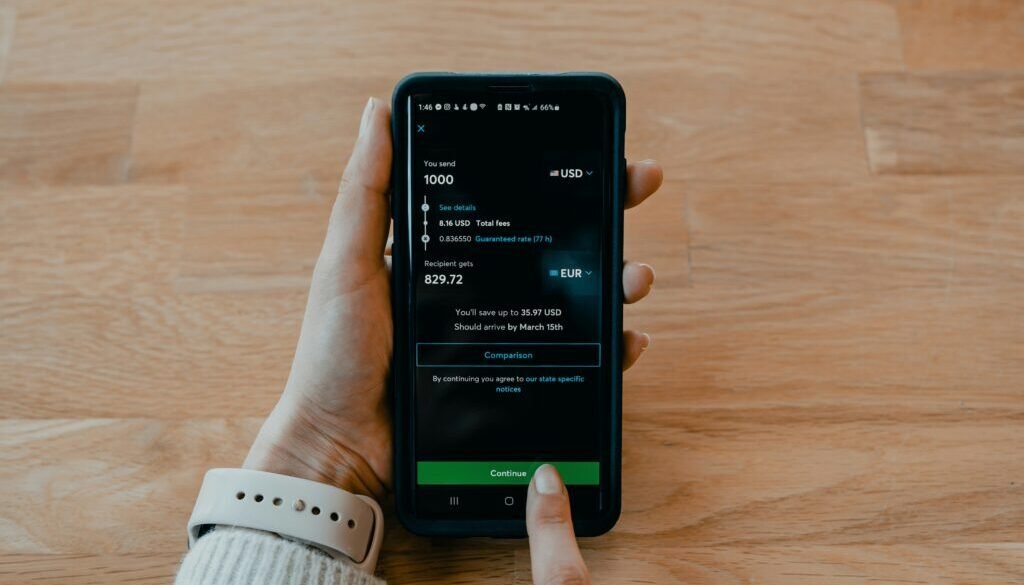
To compare services: go to each service’s website or app, enter the same transfer amount to the same destination country, note the exchange rate offered and the fee charged, note the final amount the recipient will receive, and compare those recipient amounts across services. The service that delivers the most money to your recipient for the same amount sent is the most cost-effective option for that transfer.
You can also use comparison websites that do this calculation across multiple services simultaneously. Monito, Finder, and CompareRemit are legitimate comparison tools that aggregate transfer service data for many popular corridors. They do not cover every service, but they provide a useful starting point.
Category One: Dedicated Digital Money Transfer Services
This category represents the most cost-efficient option for most immigrants sending regular remittances.
Dedicated money transfer services — companies whose primary or exclusive business is international transfers — have built digital infrastructure specifically designed to move money across borders efficiently and at low cost. By operating digitally and bypassing the traditional SWIFT correspondent banking system, they can offer significantly better rates and lower fees than traditional banks.
Wise (formerly TransferWise)
Wise is widely recognized as one of the most transparent and cost-efficient services available. It uses the mid-market rate — the true market exchange rate — and charges a small, explicitly disclosed percentage fee on top. There is no hidden exchange rate markup.
The fee structure is completely transparent: Wise shows you exactly what fee they are charging, applies the mid-market rate, and shows you exactly how much the recipient will receive before you confirm the transfer. This level of transparency makes it easy to understand the true cost and to compare against other services.
Wise is available in a large number of countries and supports most major currencies. Transfers are typically processed within one to two business days for bank-to-bank transfers, with some corridors offering faster delivery. Particularly well-suited for immigrants who send larger amounts regularly and for whom the exchange rate matters more than the flat fee.
Remitly
Remitly is specifically built for immigrant remittances and available in a large number of sending and receiving countries. It offers two tiers of service: an Economy tier (lower fee, slower delivery, typically two to five days) and an Express tier (higher fee, faster delivery, often same day or within hours).
Remitly typically offers competitive exchange rates, though they include a modest margin above the mid-market rate. The total cost — fee plus exchange rate margin — is generally lower than traditional alternatives.
Remitly has strong coverage in Latin America, South Asia, Southeast Asia, and the Philippines. For first-time users, Remitly frequently offers promotional rates with no fee and a better exchange rate. These promotions can be valuable for a first transfer but may not reflect the regular ongoing cost.
WorldRemit
WorldRemit supports multiple delivery methods in many destinations — bank deposit, mobile money, cash pickup, and airtime top-up (adding credit to a mobile phone). Exchange rates include a margin above mid-market, and fees vary by destination and delivery method. The total cost is generally competitive with other digital services.
WorldRemit is particularly useful for transfers to countries where mobile money is the primary financial infrastructure, such as several Sub-Saharan African countries.
Xe Money Transfer
Xe is primarily known as a currency information service — XE.com is one of the most widely used exchange rate reference tools — and it also operates a money transfer service. Xe offers competitive rates for larger transfers and is often cost-effective for amounts above $1,000.
Category Two: Traditional Money Transfer Operators
Traditional money transfer operators — most prominently Western Union and MoneyGram — are the oldest players in this market. They have the most extensive physical agent networks worldwide, which is both their primary strength and the reason they are sometimes the right choice despite generally higher costs.
Western Union
Western Union has agent locations in virtually every country in the world and tens of thousands of locations in the United States. It offers cash pickup, bank deposit, and mobile wallet delivery depending on the destination country.
Its strengths are clear: unmatched physical reach, cash pickup capability where banking infrastructure is limited or absent, speed — cash pickup can sometimes be available within minutes — and a long track record of reliability.
The weakness is cost. Western Union’s total costs are generally higher than digital alternatives, particularly when exchange rate margins are included. Costs also vary significantly by destination, delivery method, and how you pay — bank account versus debit card versus credit card.
Best for: Recipients who do not have bank accounts and need to collect cash at an agent location. Transfers to remote areas where digital delivery is not available. Emergency situations where immediate cash pickup is the primary requirement.
When using Western Union, always compare the total recipient amount to digital alternatives before initiating. In some corridors and for some delivery methods, Western Union’s rates are competitive. In others, the cost difference is significant.
MoneyGram
MoneyGram is structurally similar to Western Union — a large physical agent network, multiple delivery options, and varying costs by destination and method. MoneyGram has been expanding its digital capabilities and partnering with mobile money networks in some regions. For specific corridors, MoneyGram’s rates are competitive with digital alternatives.
The same principle applies: compare the recipient amount before using, rather than assuming the cost is higher than digital alternatives. In some cases, it may not be.
Category Three: Banks
Traditional banks offer international wire transfers through the SWIFT network.
Their strengths are security and trust. For very large transfers — amounts in the tens of thousands of dollars — many people prefer the security of a bank-to-bank wire. Accounts are FDIC insured and customer service is available for issues.
The weakness is cost. Bank wire fees are typically $25 to $50. Exchange rate margins at banks are often among the highest of any transfer method — frequently 3 to 5 percent or more above the mid-market rate. Correspondent bank fees may also be deducted from the transfer amount in transit without being clearly disclosed upfront.
Best for: Very large transfers where security is paramount and the percentage cost of the exchange rate markup is less significant in absolute terms. Transfers to countries where digital money transfer services have limited availability.
For the regular remittances most of us send — amounts of $100 to $1,000 — bank wire transfers are generally not the most cost-effective choice.
Category Four: Digital Wallet and Mobile Apps
PayPal and Xoom
PayPal owns Xoom, a service specifically designed for international remittances. Xoom supports bank deposits, cash pickup, and in some countries, direct bill payment. It benefits from the familiar PayPal ecosystem and multiple delivery options.
The consideration is that exchange rate margins can be higher than dedicated transfer services, and fees vary by destination and payment method. Credit card payments generate higher fees than bank account payments. Best for people already deeply integrated into the PayPal ecosystem who value the convenience of a single platform.
Cash App, Venmo, and Zelle
These services are designed primarily for domestic U.S. transfers and do not support international transfers in the traditional remittance sense. They should not be confused with services designed for cross-border transfers.
Category Five: Cryptocurrency and Blockchain-Based Services
Some services use blockchain technology and stablecoins pegged to the U.S. dollar to move value internationally. In theory, this can be fast and low-cost, bypassing traditional banking infrastructure entirely.
In practice, recipients need the ability to receive and convert cryptocurrency, which requires wallets, exchange access, and technical knowledge. Regulatory status varies significantly by country. Conversion costs at both ends can add up. For recipients who are not already using cryptocurrency, the complexity is a significant barrier.
For the majority of immigrants sending regular remittances to family, established digital transfer services offer comparable speed and considerably lower complexity. Cryptocurrency alternatives are best suited for technically sophisticated senders and recipients who are already integrated into that ecosystem.
Choosing the Right Service for Your Specific Corridor
The best money transfer service depends significantly on where you are sending money. Transfer costs, available delivery methods, and service reliability vary considerably by destination.
For popular high-volume corridors — USA to Mexico, USA to India, USA to the Philippines, USA to El Salvador, USA to Guatemala — competition is intense and costs have been driven down significantly. Multiple digital services offer competitive rates. Compare using a comparison tool and look for the service with the best recipient amount for your typical transfer size.
For less common corridors: Fewer services may be available and competition may be lower. It is more important to compare carefully in these corridors because the default option may not be efficient.
When recipients do not have bank accounts: Cash pickup services or mobile money options may be the only practical choice regardless of cost.
When speed is critical: Express options at services like Remitly, Western Union, or MoneyGram may be worth the higher cost in a genuine emergency, even if economy options are better for regular transfers.
Red Flags: Services to Approach With Caution
Not every money transfer service operates with the same integrity.
No upfront disclosure of fees and exchange rates — legitimate services are required by U.S. law to disclose the full cost before you complete the transfer. Requiring you to send money before explaining costs. Guaranteeing exchange rates dramatically better than established services — this is a common scam. No customer service contact information or no physical address. Requests for payment via gift cards, cryptocurrency, or wire transfers to unknown parties.
You can verify registration through FinCEN’s online database. In the United States, money transfer businesses must register with FinCEN as Money Services Businesses. Check before using any unfamiliar service.
Building a Transfer Strategy
Rather than making ad hoc transfer decisions each time, building a regular transfer strategy saves money and reduces stress.
Identify your primary transfer corridor. Most of us send money to one or two primary destinations. Research the best services for your specific corridor and establish which one or two are most cost-effective.
Determine your typical transfer amount. The relative cost-effectiveness of different services can vary by amount. Some services have lower percentage costs for larger transfers; others have flat fees that are proportionally higher for small amounts.
Set up a regular transfer schedule. Sending money on a predictable schedule — monthly, for example — is easier to plan for than making ad hoc transfers in response to family requests. It also allows you to budget for the transfer amount accurately.
Monitor for better options annually. The transfer service market is competitive and constantly evolving. What is the best option today may not be the best option in two years. Check comparison tools periodically to ensure you are still using the most efficient service for your corridor.
The Right Service Makes Every Dollar Go Further
The money you send home is money you earned through your work in the United States. It represents real hours of your life. Ensuring that as much of it as possible reaches your family — rather than being consumed by fees and exchange rate markups — is not a trivial concern.
The right service for your regular transfers can save you $200, $400, or more per year compared to a less efficient option. Over five or ten years, that difference is meaningful.
Now you understand the landscape: digital transfer services for regular cost-efficient remittances, traditional operators for cash pickup needs, banks for large secure transfers, and how to evaluate every option using the recipient amount as your primary comparison metric.
In our next guide, we go deeper into the single most important and most commonly misunderstood cost in international transfers: exchange rates. Understanding how exchange rates work — and how to evaluate whether you are getting a fair one — is one of the most valuable pieces of financial knowledge we can develop.